
A Statistical Anomaly: Unraveling Schizophrenia in 'The Matrix'
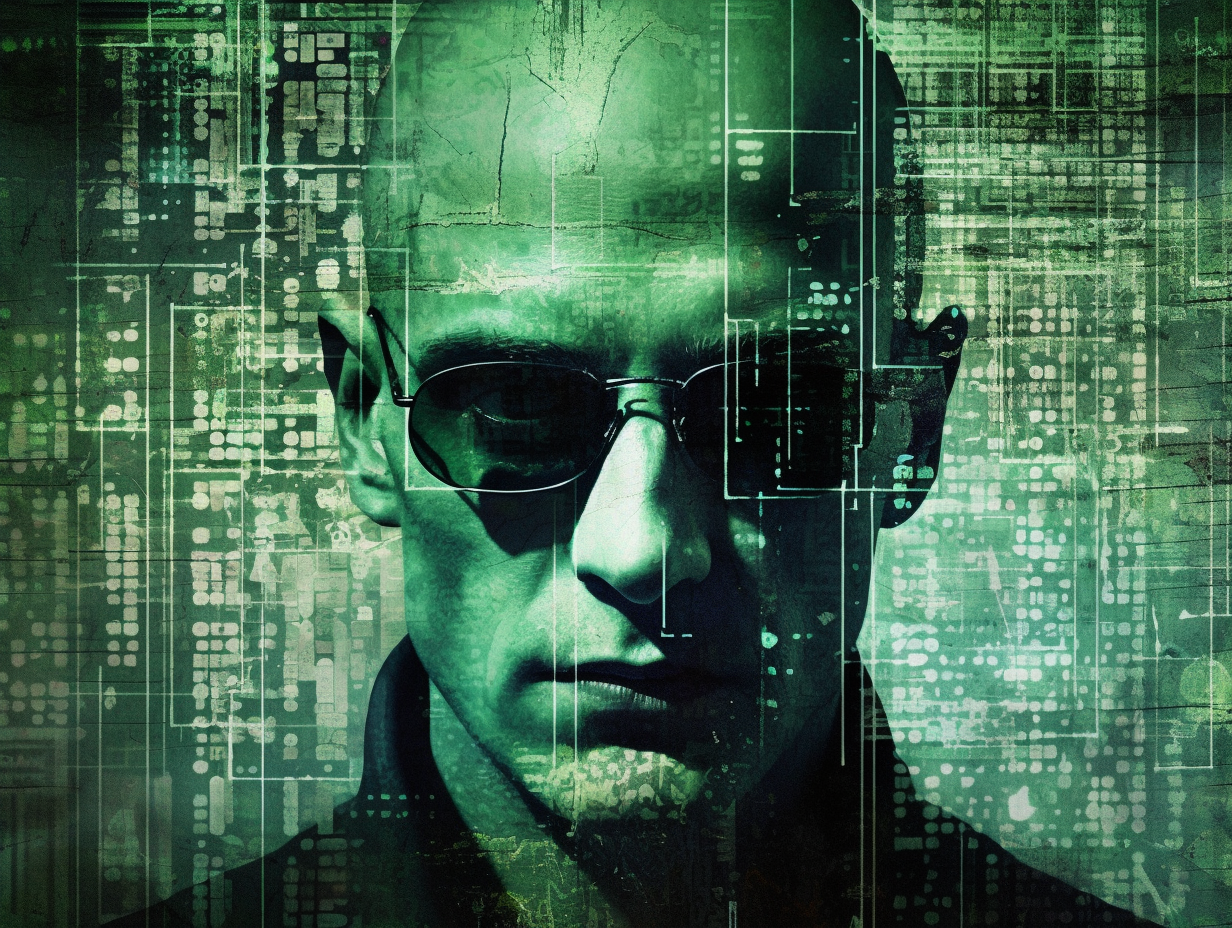
What if one of the most interesting ways to read The Matrix is not simply as a story about technology, control or simulation—but as a story about what happens when one person's reality becomes incompatible with everyone else's?
There is something unsettling about watching Neo insist that the world around him is wrong. His ordinary life feels artificial. He suspects unseen forces are watching him. Strangers appear to know things about him. A mysterious group tells him that nearly everyone else has mistaken a fabricated world for reality.
Within the logic of The Matrix, Neo is right.
But remove that certainty for a moment and the story becomes much more disturbing.
A person becomes convinced that everyday reality is not what it appears to be. He believes powerful forces are manipulating the world around him. He thinks he has discovered a truth invisible to most people. He encounters figures who confirm that belief. Eventually, he comes to see himself as uniquely capable of understanding—and ultimately controlling— the hidden structure of reality.
The statistical anomaly
The original version of this article began with Neo as a statistical anomaly, and that remains one of the most interesting parallels.
Neo is not merely another person who learns that the Matrix exists. He is told that there is something extraordinarily unusual about him. He may be “The One”: the person who can perceive, manipulate and ultimately transcend the rules governing everyone else.
Schizophrenia is also uncommon. The World Health Organization's current estimate is approximately 23 million people worldwide—about 1 in 345 people, or 0.29% of the global population.
Statistics alone do not make a person “Neo,” of course. The more meaningful similarity is social.
To be the anomaly is to inhabit an experience most other people do not share. Neo cannot simply explain what he sees and expect everyone around him to understand. Once he crosses the boundary between accepted reality and his new one, returning to an ordinary life becomes almost impossible.
That sense of separation matters. Schizophrenia can affect work, education, relationships and ordinary social functioning, while stigma can intensify the isolation. The statistical comparison therefore works best not as “Neo is rare, schizophrenia is rare,” but as a metaphor for what it can mean to experience reality in a way that separates you from the consensus around you.
The Matrix as a delusional world
A delusion is not simply an unusual opinion. In clinical descriptions of psychosis, it is a strongly held belief that is not objectively true, sometimes involving danger, hidden messages, external control or special significance.
That makes the Matrix an unusually powerful metaphor. Billions of people experience an environment that feels completely authentic while the physical reality beneath it is radically different.
From inside the simulation, the false world does not feel false. Gravity works. Jobs exist. Food has flavor. Buildings feel solid. Other people reinforce the same reality.
The important parallel is not that schizophrenia means “living in an imaginary universe.” It is that subjective certainty can be extraordinarily powerful. An experience can feel completely real to the person having it even when other people do not share the same interpretation.
Where it breaks: in the movie, the simulated world literally exists.
The red pill and the terrifying problem of insight
The red-pill scene has become so culturally familiar that it is easy to forget how frightening the choice actually is.
Morpheus does not offer Neo comfort. He offers the destruction of Neo's existing explanation of reality.
The blue pill
Return to the familiar world. Preserve the explanation that makes everyday life coherent. Stop pursuing the possibility that everything you believe may be wrong.
The red pill
Accept that your current understanding of reality may be unreliable and enter a far more difficult process of reconstructing what is real.
As a metaphor, the red pill can represent insight: acknowledging that one's interpretation of an experience may need to be questioned and accepting help in making sense of it.
That metaphor has limits. Mental-health treatment is not a single moment in which someone simply decides to stop believing something. Psychosis cannot be reduced to stubbornness, and treatment does not amount to another person announcing which reality must be accepted.
Still, the emotional idea underneath the scene is powerful. Questioning your own perception can be frightening. Imagine discovering that an explanation you trusted—perhaps one that connected dozens of otherwise confusing experiences—might not correspond to the external world.
Neo's red pill is dramatic because it asks him to sacrifice certainty. That is why the scene works as a metaphor even if the clinical process is vastly more complicated.
The trauma of awakening
Neo's first moments outside the Matrix are not triumphant.
He is frightened, physically helpless and overwhelmed by a reality that contradicts nearly every assumption he has made about his life. He cannot immediately integrate what has happened to him.
The original article called this a “breakdown.” A more careful comparison is the disorientation surrounding a crisis of reality. NIMH describes psychosis as involving disrupted thoughts and perceptions and difficulty determining what is real.
Neo's awakening dramatizes that uncertainty in reverse. The world he believed was real actually was false. But the emotional territory— fear, confusion, disorientation and the collapse of a previously coherent worldview—is still recognizable.
Psychosis and reality-bending
Neo gradually learns that the rules of the Matrix are not fixed. He jumps impossible distances. He moves faster than ordinary people. He dodges bullets. Eventually, he sees the code beneath the simulated world itself.
Those scenes can be read metaphorically alongside altered perception: the idea that the experienced world may no longer behave according to the assumptions everyone else considers obvious.
The bullet-dodging scene makes that especially vivid. What an outside observer would consider impossible becomes internally coherent once Neo accepts a different model of reality.
Again, the comparison is symbolic. Hallucinations are not magical powers, and psychosis does not free someone from physical laws. But cinema can visualize something that is difficult to describe: perception itself becoming contested.
The Agents and persecutory paranoia
Then there are the Agents.
They can appear almost anywhere. Ordinary people can suddenly become part of the threat. Neo learns that surveillance may be hidden inside familiar surroundings and that people who look harmless may become instruments of a system determined to stop him.
The connection to persecutory delusions is difficult to miss. NIMH gives examples of psychotic delusions that include believing that one is in danger or that other people are attempting to cause harm.
The Agents give cinematic form to that fear: danger is everywhere, invisible until it reveals itself, and seemingly coordinated around the protagonist.
“The One” and grandiosity
Imagine describing Neo's beliefs without revealing the ending.
He believes he may be the uniquely important person predicted by a prophecy. He believes the ordinary rules governing everyone else do not necessarily apply to him. He eventually believes he can perform acts no other person can perform and may determine the future of humanity itself.
Read from outside the movie's fictional truth, that sounds remarkably close to grandiose delusional content: extraordinary ability, exceptional identity, unique destiny and world-changing importance.
The film even gives Neo a social environment that reinforces those ideas. Morpheus believes in him. Others organize their lives around the prophecy. Extraordinary events appear to confirm it.
And then the movie performs its most important reversal.
Neo actually can do those things.
And this is where the analogy breaks
This distinction is not a footnote. It is central to interpreting The Matrix responsibly.
Neo's apparently impossible worldview accumulates objective, externally verifiable evidence.
Clinical delusions are not defined merely by the fact that other people find a belief strange. Evidence matters.
If someone says an extraordinary thing and later produces repeatable, independent evidence proving it, continuing to call the belief a delusion would make little sense.
Neo is therefore an intentionally unstable metaphor for psychosis. For much of the story, he behaves like someone whose private interpretation of reality conflicts radically with ordinary consensus. Yet the audience is gradually shown that the consensus is the thing that is wrong.
That tension is what makes this interpretation more interesting than simply declaring, “Neo has schizophrenia.”
Schizophrenia is much more than hallucinations and delusions
Popular culture tends to reduce schizophrenia to dramatic psychosis: voices, paranoia, bizarre beliefs and visual spectacle.
That makes for memorable cinema. It is also incomplete.
The National Institute of Mental Health groups schizophrenia symptoms into three broad categories.
Psychotic
Delusions, hallucinations and thought disorder—changes in how a person experiences and interprets reality.
Negative
Reduced motivation or pleasure, social withdrawal, limited emotional expression and difficulty maintaining ordinary activity.
Cognitive
Difficulties involving attention, concentration, memory, information processing and decision-making.
The Matrix parallels the first category much more naturally than the other two.
Neo is not written as someone struggling persistently with diminished motivation, cognitive impairment or reduced ability to function. In fact, his narrative moves in the opposite direction: as he accepts his new reality, he becomes increasingly capable.
That is another reason the film should be treated as an interpretive doorway rather than a representation of what schizophrenia “looks like.”
Sometimes culture really does enter psychosis
Here the discussion becomes stranger, because the relationship between movies and psychotic experiences does not exist only in literary theory.
A patient whose psychosis incorporated The Matrix
A peer-reviewed 2023 case report in Psychiatry International described a 24-year-old man diagnosed with paranoid schizophrenia and gaming disorder.
According to the report, his psychotic symptoms incorporated themes from video games and The Matrix. Among the reported beliefs were that he was inside a video game and that people around him were “non-playable characters.”
The case does not show that The Matrix causes schizophrenia, nor does it prove that the film itself is an allegory for the disorder.
What it does show is more subtle: existing culture can provide language and imagery through which unusual experiences are interpreted.
There is another famous example involving a different movie.
Psychiatrists Joel Gold and Ian Gold described what became known as the “Truman Show” delusion: cases in which people experiencing psychosis believed their lives were secretly being filmed or broadcast and that people around them were participating in a constructed reality.
The Truman Show did not invent persecutory or grandiose delusions. Television did not invent the feeling of being watched. Instead, modern media supplied a contemporary explanation for an older human experience.
In another era, the organizing imagery might have involved religion, monarchs, radio transmitters, espionage or supernatural forces. In a technological culture, cameras, simulations, algorithms, video games and artificial intelligence can become part of the available vocabulary.
That makes The Matrix unusually relevant. It is a story built around perhaps the most destabilizing question a person can ask:
What if the reality everyone accepts is not actually real?
The danger of turning schizophrenia into a superpower
There is, however, a serious risk in this interpretation.
Neo's rejection of consensus reveals the truth.
Real psychosis should not be romanticized as secret enlightenment. Schizophrenia is not evidence that someone has escaped a simulation, developed supernatural perception or become capable of seeing truths inaccessible to everyone else.
That distinction is especially important because stigma around schizophrenia remains substantial. WHO reports that discrimination can affect people's relationships and access to health care, employment, education and housing.
Another persistent stereotype associates schizophrenia automatically with violence. NIMH states that most people with schizophrenia are not violent and are more likely than people without the illness to be harmed by others.
A responsible reading of The Matrix should therefore increase empathy for the experience of uncertainty—not turn psychiatric illness into a mystical shortcut to hidden knowledge.
What treatment actually looks like
This is where the red-pill metaphor reaches its limit most clearly.
Recovery is not a single choice between accepting reality and refusing it.
Modern schizophrenia and psychosis care may involve several forms of support working together.
NIMH describes coordinated specialty care as the standard of care for early psychosis, and WHO emphasizes recovery-oriented community care. Effective treatment exists. Recovery can mean complete remission for some people and, for others, living a fulfilling and productive life while continuing to manage symptoms.
Parallel or difference?
This is not a mental-health assessment. It tests the distinction at the center of this article: where the Matrix analogy helps us think about psychosis—and where the comparison fails.
1. Neo believes powerful forces are pursuing him.
2. Neo experiences profound uncertainty about which version of reality should be trusted.
3. Neo discovers that he can actually violate physical rules.
4. Neo believes that ordinary events conceal a larger meaning invisible to most people.
5. Morpheus and the crew independently observe the same hidden reality Neo describes.
6. The red pill can symbolize the frightening process of questioning an explanation of reality that once felt certain.
What if Neo had been wrong?
This may be the most uncomfortable question raised by the entire interpretation.
Suppose there were no machines.
Suppose Morpheus did not possess technology capable of independently demonstrating the Matrix.
Suppose the Agents never appeared to anyone else.
Suppose Neo continued insisting that strangers could transform into government-like enforcers, that physics was artificial, that his ordinary life had been manufactured and that he possessed a unique ability to free humanity.
From outside his experience, how would anyone distinguish revelation from delusion?
And from inside his experience, how would Neo?
The answer cannot simply be “believe the majority.” Consensus can be wrong. History provides no shortage of ideas that were rejected before evidence supported them.
But the answer also cannot be “believe whatever feels true.” Subjective certainty is not evidence.
What separates Neo from a person holding an unfounded extraordinary belief is not the intensity of his conviction.
It is verification.
Other people can enter the Matrix. Machines can be observed. Events produce independent consequences. Predictions can be tested. Evidence accumulates outside Neo's own mind.
That makes The Matrix unexpectedly compatible with a broader principle of critical thinking: extraordinary experiences deserve neither automatic dismissal nor automatic acceptance. Confidence should follow evidence.
The final paradox
The schizophrenia interpretation of The Matrix works because Neo spends much of the story occupying exactly the position that would make an outside observer question his grasp on reality.
The world is fake.
Someone is watching him.
Hidden forces control ordinary people.
He possesses extraordinary abilities.
He may have a unique destiny.
Reality itself bends around him.
Those parallels create a provocative way to think about psychosis, paranoia, grandiosity and the frightening fragility of certainty.
But the film refuses to complete the metaphor.
Neo is right.
His impossible beliefs are independently validated. The conspiracy is real. The persecutors exist. The world actually is artificial. His abilities genuinely exceed those of the people around him.
And that may be what makes this reading worth considering.
The Matrix does not show us schizophrenia. It gives us a fictional thought experiment in what it feels like for the foundations of reality to become negotiable—and then grants its protagonist the extraordinary privilege of discovering that his impossible reality was the correct one.
For people experiencing psychosis, there is no screenwriter waiting to reveal which interpretation wins in the final act.
There is evidence, uncertainty, treatment, support, recovery and the much harder process of building a life while determining what deserves to be trusted.
That distinction does not weaken the theory.
It is the distinction that makes the theory interesting.
Sources & further reading
- World Health Organization — Schizophrenia . Updated October 6, 2025.
- National Institute of Mental Health — Schizophrenia . Symptoms, treatment and recovery information.
- National Institute of Mental Health — Understanding Psychosis .
- Huu Kim Le et al., “Game Transfer Phenomena in a Clinical Case with Psychosis and Gaming Disorder” , Psychiatry International, 2023.
- Joel Gold and Ian Gold, “The ‘Truman Show’ Delusion: Psychosis in the Global Village” , Cognitive Neuropsychiatry, 2012.
Share this article
Found this useful? Share it with someone else.