Do We Live in a Simulation? Debunking the Modern Myth

Simulation theory sounds scientific, but its most famous argument is philosophical—not proof that reality is software.
The possibility that our world is an artificial simulation has become one of the internet’s favorite explanations for everything from quantum mechanics to déjà vu. It is a fascinating thought experiment. It is also frequently presented with far more certainty than the evidence allows.
An ancient question in digital clothing
Long before computers, philosophers asked whether human experience reveals reality as it truly is. Plato’s cave used prisoners and shadows. René Descartes imagined a deceiver powerful enough to manipulate every perception. The modern simulation hypothesis replaces shadows and demons with processors, code, and virtual worlds.
Science fiction made the translation vivid. Daniel F. Galouye’s Simulacron-3 imagined a simulated city in 1964. The Matrix gave the idea its most enduring visual language in 1999. Then, in 2003, Oxford philosopher Nick Bostrom gave the conversation a formal probabilistic structure.
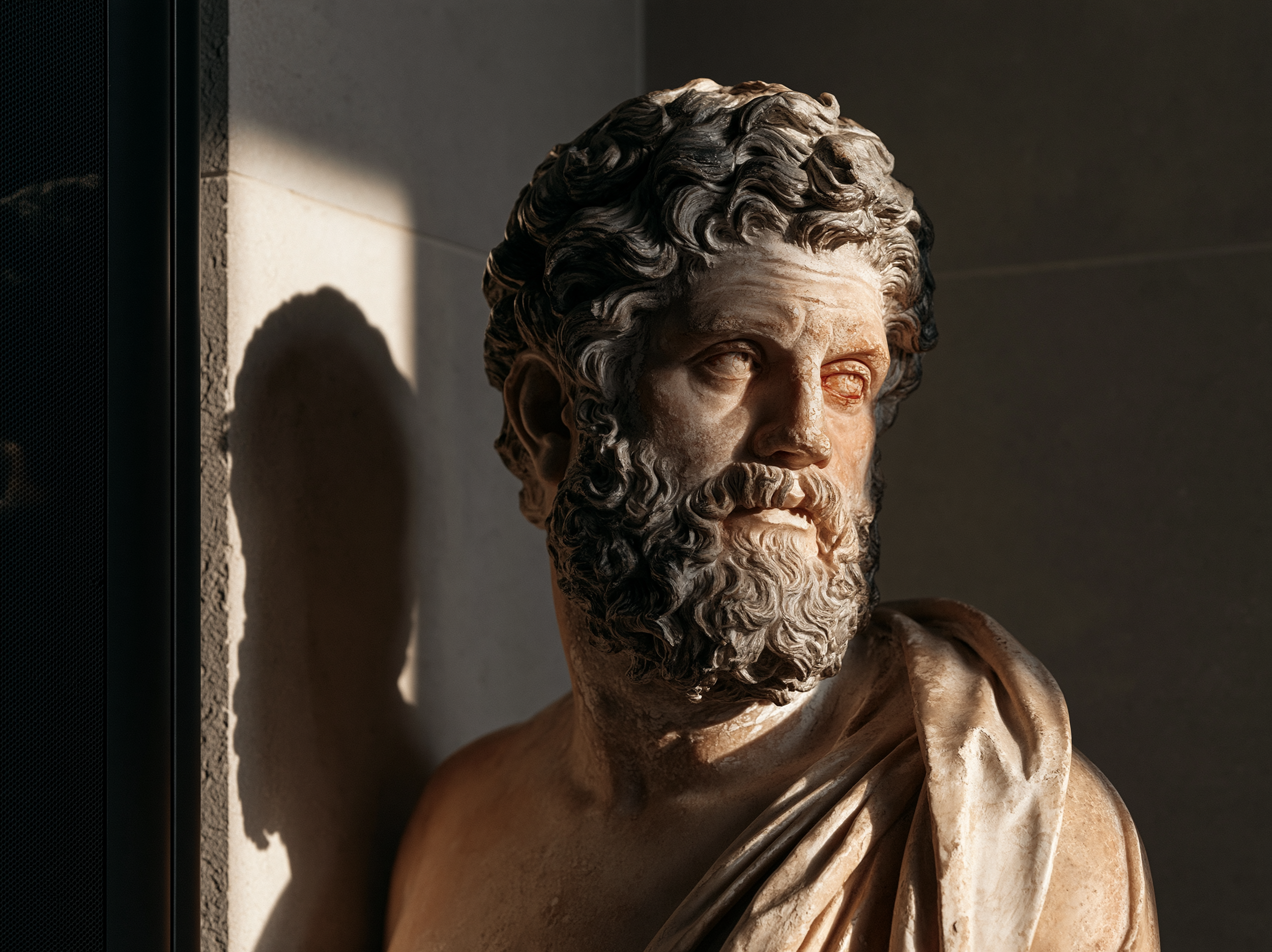
What Bostrom actually argued
Bostrom’s paper argues that at least one of three propositions is true. The logic depends on future civilizations becoming capable of creating enormous numbers of conscious “ancestor simulations.”
Civilizations rarely reach the required stage
Human-level civilizations may become extinct—or otherwise fail—before gaining the technology to run high-fidelity ancestor simulations.
Advanced civilizations rarely run them
Even if capable, posthuman societies may lack the desire, legal permission, resources, or ethical willingness to create conscious simulated ancestors.
Simulated observers vastly outnumber originals
If many simulations are created and their inhabitants are conscious, most observers with experiences like ours would be simulated.
Why the idea feels convincing
Technology keeps improving
From weather models to virtual worlds, simulations have become more detailed. It is tempting to extend that trend indefinitely—but an extrapolation is not evidence that conscious universe-scale simulations will exist.
Numbers can become overwhelming
If each advanced civilization created millions of conscious worlds, simulated observers could outnumber biological ones. The conclusion only follows if the disputed technological and consciousness assumptions are granted.
Physics is mathematically describable
The universe follows regularities that mathematics can model. That makes simulation conceivable, but mathematical order does not by itself imply a programmer.
Quantum mechanics feels unfamiliar
Superposition, probabilities, and measurement sound like “rendering” to modern ears. The analogy is culturally intuitive, yet standard quantum theory does not require a hidden computer.
Evidence for vs. evidence against
The fairest evaluation separates reasons the hypothesis is conceivable from observations that actually support it.
What keeps it philosophically alive
- We already create increasingly complex simulations.
- Some philosophies of mind allow consciousness to arise from the right computation.
- Bostrom’s population logic is powerful if every major premise is accepted.
- Specific grid-based universe models can generate proposed observational consequences.
What prevents a scientific verdict
- No direct observation identifies simulators, hardware, or executable code.
- We do not know whether subjective consciousness can be computed.
- We cannot estimate how many civilizations survive or choose to run ancestor simulations.
- An unrestricted simulator could conceal, alter, or explain away any result.
A theory that can explain every possible observation may be impossible to disprove—but it also explains very little.
Does simulation theory count as science?
Science needs more than possibility. A useful scientific model should make predictions that could turn out to be wrong. The broad statement “an advanced intelligence simulated everything we observe” has a problem: the simulator can always be imagined as powerful enough to hide its tracks or rewrite our memories.
That does not make every version untestable. In 2012, physicists Silas Beane, Zohreh Davoudi, and Martin Savage explored a specific scenario in which the universe is simulated on a cubic spacetime lattice. They asked whether the grid might produce symmetry-breaking patterns in ultra-high-energy cosmic rays. This is science because the model specifies machinery and possible consequences. A negative result would constrain that particular model—not disprove every simulation anyone could imagine.
Testable version
Defines the simulator’s method, predicts a distinctive signal, and risks being contradicted by observation.
Unrestricted version
Allows perfect concealment and treats every result as part of the program, leaving no observation that counts against it.

Why the idea feels so powerful
Simulation theory compresses several mysteries into one familiar metaphor. Why do physical laws exist? Why is mathematics so effective? What is consciousness? A computer-like creator appears to give these questions a common answer.
But every era borrows its deepest metaphors from its most impressive technology. Mechanical ages imagined a clockwork universe. The industrial age emphasized engines and energy. Ours reaches instinctively for software, networks, and information.
That does not make the metaphor useless. It can sharpen questions about knowledge, identity, artificial minds, and moral responsibility. Its value is greatest when it opens inquiry—not when it is mistaken for a discovery.
What would change the verdict?
Extraordinary claims do not need to be mocked; they need clear standards. A specific simulation hypothesis would become scientifically interesting if it produced evidence with all four qualities below.
What does not qualify: déjà vu, coincidences, viral “glitch” videos, the observer effect described as game rendering, or a strange news cycle. These may feel uncanny, but they do not uniquely identify a simulated universe.
Our reality is remarkable enough
The simulation hypothesis survives as a philosophical possibility and a productive science-fiction idea. It does not currently stand as an evidence-supported account of the universe.
Bostrom’s argument forces us to confront genuine unknowns about technological survival, artificial consciousness, and how observers should reason about their place in a population. It does not prove hidden programmers. Quantum mechanics is not a computer artifact merely because it resists everyday intuition. And the Big Bang and evolution are not technological creation myths; they are scientific frameworks supported by converging evidence and open to revision through further evidence.
Skepticism does not drain the world of wonder. It protects wonder from premature certainty. Whether reality is fundamental or simulated, our experiences have consequences, other minds deserve moral consideration, and the universe before us remains worthy of careful study.
Read deeper
Want to support A Wandering Mind while shopping? Visit our Amazon Search page. As an Amazon Associate, A Wandering Mind may earn from qualifying purchases at no additional cost to you.
Simulation theory FAQ
Did Nick Bostrom prove that we live in a simulation?
No. Bostrom argued that at least one proposition in a three-part trilemma is true. Only the third says simulated observers would dominate, and the argument does not establish which proposition describes reality.
Does quantum mechanics show that the universe is rendered?
No accepted result in quantum mechanics demonstrates computer rendering. The analogy is popular, but quantum probabilities, measurement, and discreteness do not by themselves imply a simulator.
Can simulation theory be tested?
Broad versions that allow an all-powerful simulator may be unfalsifiable. Narrow models that specify a computational method can make testable predictions, though ruling out one model would not rule out every possible simulation.
Would life be meaningless if reality were simulated?
Not necessarily. Experiences, choices, relationships, harm, and well-being would still matter to conscious beings inside a virtual world. The substrate of reality does not automatically determine its moral value.
Sources and further reading
- Nick Bostrom, “Are You Living in a Computer Simulation?” The Philosophical Quarterly, 2003.
- Silas R. Beane, Zohreh Davoudi, and Martin J. Savage, “Constraints on the Universe as a Numerical Simulation,” arXiv, 2012; later published in The European Physical Journal A.
- Zohreh Davoudi, “Are We Living in a Simulation?” TED-Ed.
- David J. Chalmers, Reality+: Virtual Worlds and the Problems of Philosophy, 2022.
Originally published August 13, 2023. Substantially rewritten and fact-checked August 3, 2026.
Share this article
Found this useful? Share it with someone else.