
Best Cameras for Beginners in 2026: Choose by Budget and Photography Style
2026 beginner camera decision guide
Choose the camera that fits what you actually photograph
The best first camera is not automatically the newest or most expensive. It is the one whose controls, lens options, autofocus and size match the photographs—or videos—you will make most often.
Beginner camera lists often rank several good models without explaining why one is better for family photos while another makes more sense for birds, travel or video. This guide starts with the work you want to create, then narrows the choice to six current mirrorless cameras with different strengths.
All six use interchangeable lenses, so the camera body is only the beginning. A modest body with the right lens usually produces better results than a more expensive body paired with a lens that cannot frame the subject. That is especially true for wildlife, indoor family photography and video.
Start with your photography style
Select the work you expect to make most often. The result is a starting point, not an automatic purchase decision.
As an Amazon Associate I earn from qualifying purchases. Product links are marked as paid links. Prices and availability can change, so this article does not display or track them.
The six recommendations at a glance
| Best for | Camera | Why it fits | Main tradeoff | Lens path |
|---|---|---|---|---|
| Everyday & family | Canon EOS R50 | Friendly controls, strong autofocus, flip screen and useful hybrid features | Small body can feel cramped with larger lenses | Kit lens first; add a compact prime or telephoto later |
| Wildlife & birds | Nikon Z50II | Fast processing, subject detection and a practical two-lens kit option | No in-body image stabilization | Start with 16–50mm plus 50–250mm |
| Travel | Fujifilm X-M5 | Very compact body, strong color options and capable video | No electronic viewfinder | Compact kit zoom; add 50–230mm for distant details |
| Video & vlogging | Sony ZV-E10 II | Video-centered controls, 4K recording, articulating screen and strong lens ecosystem | No viewfinder and no in-body stabilization | Kit power zoom; add a bright prime for indoor work |
| Manual learning | Fujifilm X-T30 III | Dedicated dials make exposure choices visible and tactile | Compact grip and no in-body stabilization | Small zoom or normal prime |
| Lowest-cost start | Canon EOS R100 | Simple APS-C stills camera with access to Canon RF lenses | Fixed non-touch screen and limited 4K experience | Use the kit lens until it limits a specific subject |
Choose by subject, not by ranking
Every recommendation below can produce excellent photographs. The differences are mostly about how quickly the camera helps a new photographer reach a result, which lenses make sense next, and which limitations may become frustrating.
Best balanced beginner camera
Canon EOS R50
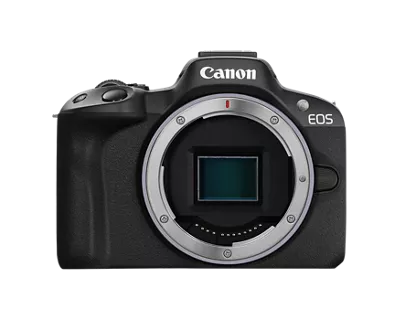
The EOS R50 is the easiest recommendation for a beginner who wants one small camera for children, pets, gatherings, vacations and occasional video. Its 24.2-megapixel APS-C sensor, subject-detection autofocus and fully articulating touchscreen reduce the number of technical obstacles between seeing a moment and capturing it.
- 24.2MP APS-C
- Electronic viewfinder
- Vari-angle touchscreen
- 4K video
- RF lens mount
The R50 makes sense when several people in a household may use the camera. Automatic modes are approachable, but the camera still provides manual exposure, RAW files and interchangeable lenses as skills grow.
Best beginner wildlife starting point
Nikon Z50II
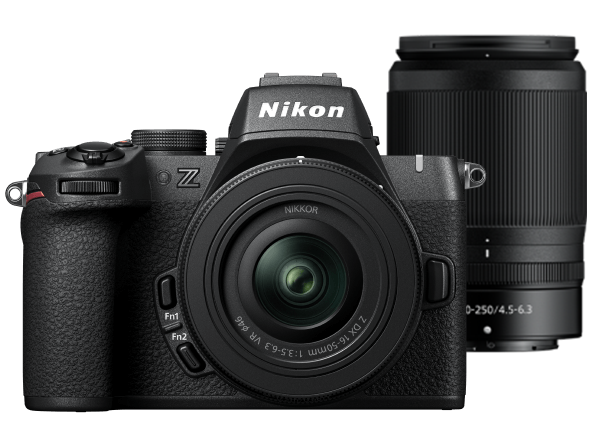
Wildlife photography asks more from autofocus and lenses than most everyday subjects. The 20.9-megapixel Nikon Z50II pairs an APS-C sensor with Nikon’s newer EXPEED 7 processor, broad subject detection and 3D-tracking. The smaller APS-C sensor also gives a narrower field of view than full frame with the same focal length, which is useful when birds remain far away.
- 20.9MP APS-C
- Subject detection
- 3D-tracking
- Electronic viewfinder
- Nikon Z mount
The practical attraction is the two-lens kit containing a 16–50mm everyday zoom and a 50–250mm telephoto. It is not the final word in bird photography, but it lets a beginner move from landscapes to distant animals without immediately researching a separate long lens.
Best compact travel choice
Fujifilm X-M5

The Fujifilm X-M5 is built around a 26.1-megapixel APS-C sensor and a compact body that is easy to carry for an entire day. Fujifilm’s film simulations make it appealing to travelers who want attractive JPEG files without editing every photograph, while RAW capture remains available for deeper work later.
- 26.1MP APS-C
- Compact body
- Film simulations
- Articulating screen
- Fujifilm X mount
It is a strong fit for city walks, food, people, architecture and short travel videos. The major decision is whether you are comfortable composing on the rear screen. Unlike the other stills-oriented choices here, the X-M5 does not include an electronic viewfinder.
Best video-first beginner camera
Sony ZV-E10 II
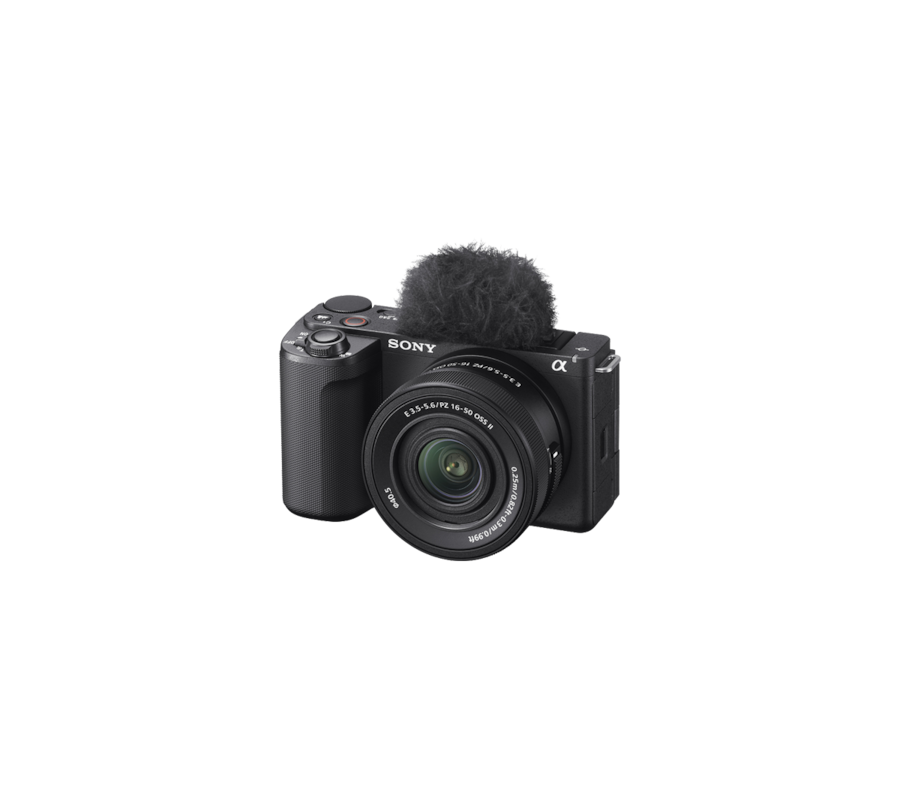
The Sony ZV-E10 II is designed for creators who will spend more time recording than looking through a viewfinder. It combines a 26-megapixel APS-C sensor, 4K recording, a fully articulating screen, microphone and headphone connections, and access to a large selection of Sony E-mount lenses.
- 26MP APS-C
- 4K video
- Vari-angle screen
- Mic & headphone ports
- Sony E mount
Its controls prioritize video framing, background blur and creator workflows. It can make strong still photographs, but a buyer who mainly wants photography may prefer a camera with an electronic viewfinder.
Best for learning exposure by feel
Fujifilm X-T30 III

The Fujifilm X-T30 III is the recommendation for a beginner who wants photography itself to become the hobby. Its dedicated shutter-speed and exposure-compensation controls keep important decisions visible. Instead of leaving every setting inside a menu, the camera encourages the photographer to notice how shutter speed, aperture and ISO shape the picture.
- 26.1MP APS-C
- Physical exposure dials
- Electronic viewfinder
- Film simulations
- Fujifilm X mount
The tactile control layout does not make good photographs automatically. It does, however, make experimentation more deliberate. This is valuable for anyone planning to study composition, motion blur, depth of field and light rather than relying on automatic modes forever.
Best low-cost stills-first option
Canon EOS R100
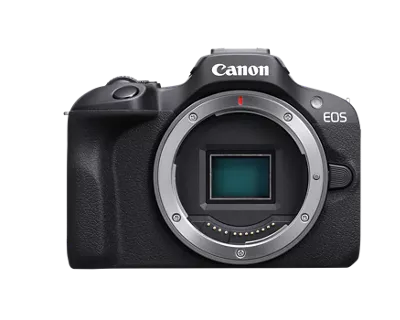
The Canon EOS R100 is the simplest way into this group. Its 24.1-megapixel APS-C sensor can make detailed photographs, and the RF mount leaves room to add lenses later. The camera is best understood as a stills-first model for someone who wants interchangeable lenses without paying for a more advanced screen, controls or video experience.
- 24.1MP APS-C
- Electronic viewfinder
- Fixed rear screen
- RF lens mount
- Compact body
The R100 can be a sensible choice for landscapes, school assignments, daylight portraits and learning basic camera operation. It is a poor fit for a buyer who expects a smartphone-like touchscreen, frequent self-recording or easy high-angle and low-angle composition.
Build the whole starter kit, not just the camera
A camera body can consume the entire budget before a beginner accounts for a lens, memory card, bag or spare power. A more useful plan is to reserve money for the parts that make the camera usable. The percentages below are a planning example, not a purchasing rule.
Camera and first lens: about 60%
A kit lens is usually the most economical way to begin. It lets you discover whether you need more reach, a wider view or a brighter aperture.
Future lens fund: about 25%
Do not spend this immediately. Keep it available until your photographs reveal a specific limitation.
Cards and protection: about 10%
Buy a reputable memory card and a bag that fits the camera with its lens attached. A second card is often more useful than a decorative accessory.
Cleaning and support: about 5%
A blower, microfiber cloth and simple tripod or monopod solve real problems. Avoid touching the image sensor unless you understand the correct procedure.
Three useful second-lens paths
A second lens should expand what you can photograph, not duplicate the kit lens because a list said every photographer needs more glass.
Canon RF-S 55–210mm
For Canon R50 or R100 users who begin photographing school sports, wildlife, zoo animals or compressed landscape details.
Check the Canon RF-S 55–210mm on AmazonPaid link · ASIN B0BTTTHPXS
Fujifilm XC 50–230mm II
For X-M5 or X-T30 III users who need more reach while keeping the lens relatively light for travel and daylight wildlife.
Check the Fujifilm XC 50–230mm II on AmazonPaid link · ASIN B016YU67L0
Sony E 35mm f/1.8 OSS
For Sony users who want brighter indoor photographs, a natural perspective and more background separation than the kit zoom provides.
Check the Sony 35mm f/1.8 OSS on AmazonPaid link · ASIN B0096W1P5W
Before buying any second lens
Review several hundred photographs and note the focal lengths used most often. Buy for the missing photograph: farther, wider, darker or blurrier—not for the idea of “upgrading.”
Five accessories that solve actual beginner problems
Reliable everyday SD card
A SanDisk Extreme PRO 128GB UHS-I V30 card is a practical match for general stills and common 4K recording modes.
Check the SanDisk 128GB card on AmazonPaid link · ASIN B09X7FXHVJ
Faster UHS-II card
A Lexar Professional 1667x 128GB UHS-II V60 card is the step-up option for cameras and video modes that can use the faster interface.
Check the Lexar 128GB UHS-II card on AmazonPaid link · ASIN B07SZ3GCC6
Small protective shoulder bag
The Lowepro Adventura SH 120 III is sized for a small mirrorless body and compact lens without turning a short walk into a full backpack expedition.
Check the Lowepro shoulder bag on AmazonPaid link · ASIN B0B82HMRRK
Travel tripod that converts to a monopod
A compact support helps with family groups, landscapes, long exposures and steadier telephoto work. Confirm the load rating and folded size for your exact kit.
Check the Fotopro travel tripod on AmazonPaid link · ASIN B0BY8SMX8Y
Basic lens-cleaning kit
Use a blower first, then lens-safe tools for fingerprints or dust on external glass. Do not use household cleaners, shirts or paper towels.
Check the Altura lens-cleaning kit on AmazonPaid link · ASIN B0098QH2BC
What about spare batteries?
Battery models vary by camera and third-party compatibility can change. Search by the exact battery code printed in the camera manual, then verify that the listing names your exact camera model before ordering.
What beginners can usually skip
A body-only deal without a lens plan
A lower camera price does not help if the correct lens immediately pushes the total beyond the budget.
Large accessory bundles
Bundles often look generous because they contain many low-value items. A reputable card, a fitting bag and one useful support are enough to begin.
Full frame for its own sake
Full-frame cameras can be excellent, but the bodies and lenses are often larger and costlier. APS-C is not a temporary format that every serious photographer must abandon.
Several lenses on day one
Use the first lens long enough to discover what it cannot do. Experience produces a better lens choice than a shopping checklist.
A five-minute camera test before buying
- Hold it with the lens attached. Make sure the grip, controls and weight feel manageable.
- Find aperture, shutter speed and ISO. The interface should feel learnable, not mysterious.
- Track a moving person. Watch whether autofocus stays on the face or eye.
- Compose high and low. Decide whether the screen movement matches how you shoot.
- Check the complete system. Look at the price, size and availability of the lens you may need next.
A used camera can be the smarter first camera
A well-kept previous-generation body from a reputable dealer may leave more room for a useful lens. Check the return policy, sensor condition, card slot, ports, battery compartment, autofocus, buttons and screen. Confirm that the exact model still receives the functions you need; “older” is not a problem, but missing parts and worn controls are.
The safest used purchase is usually a camera you can test or return. Marketplace savings are less valuable when the listing hides shutter wear, sensor damage, moisture or a missing charger.
From learning the camera to licensing photographs
A first camera does not need to produce commercial work immediately. Begin by making sharp, well-exposed photographs consistently, then learn basic editing, keywording and release requirements. When you are ready to understand the contributor workflow, read A Wandering Mind’s guide to submitting photographs and other creative work to Shutterstock.
Frequently asked questions
Should a beginner buy a mirrorless camera or a DSLR in 2026?
Mirrorless is the safer new-system purchase for most beginners because current development, autofocus improvements and new lens releases are concentrated there. A used DSLR can still be excellent when the price is low, the condition is good and the available lenses fit the subject.
How much should a beginner spend on a camera?
Start with the total kit rather than an arbitrary body price. Include the first lens, a reputable memory card, a protective bag and any subject-specific need such as a telephoto lens or microphone. Spend less when you cannot yet explain what a more expensive model changes for your work.
Is the kit lens good enough?
Yes. A kit lens covers everyday focal lengths and is the best tool for discovering what you photograph. Replace or supplement it only when you repeatedly need more reach, a wider view, better low-light performance or shallower depth of field.
What focal length does a beginner need for wildlife?
For an APS-C camera, a zoom reaching roughly 200–250mm is a practical learning range for larger or cooperative animals in good light. Small birds and distant wildlife often demand more reach, but technique, patience and access to the subject matter should develop before an expensive super-telephoto purchase.
Can a video camera also take good photographs?
Yes. The Sony ZV-E10 II and Fujifilm X-M5 can make strong still images. The tradeoff is handling: video-first bodies may omit a viewfinder or prioritize creator controls. A photographer who mainly shoots stills may find the Canon R50, Nikon Z50II or Fujifilm X-T30 III more comfortable.
Which beginner camera has the best image quality?
In normal use, lens choice, light, focus, shutter speed and editing usually matter more than the modest sensor differences among these APS-C cameras. Choose the body that helps you practice and the lens that reaches your subject.
How these cameras were selected
Recommendations were updated on August 5, 2026 using current manufacturer specifications, lens-system fit, beginner handling, likely upgrade path and the needs of each photography style. No Amazon star ratings or customer-review text were used.
Share this article
Found this useful? Share it with someone else.